kako Camping Stove Brand Guide
kako Camping Stove Brand Guide
kako Camping Stove Brand Guide: Filter by Fuel Connection, Pot Stability, and Maintenance Conditions
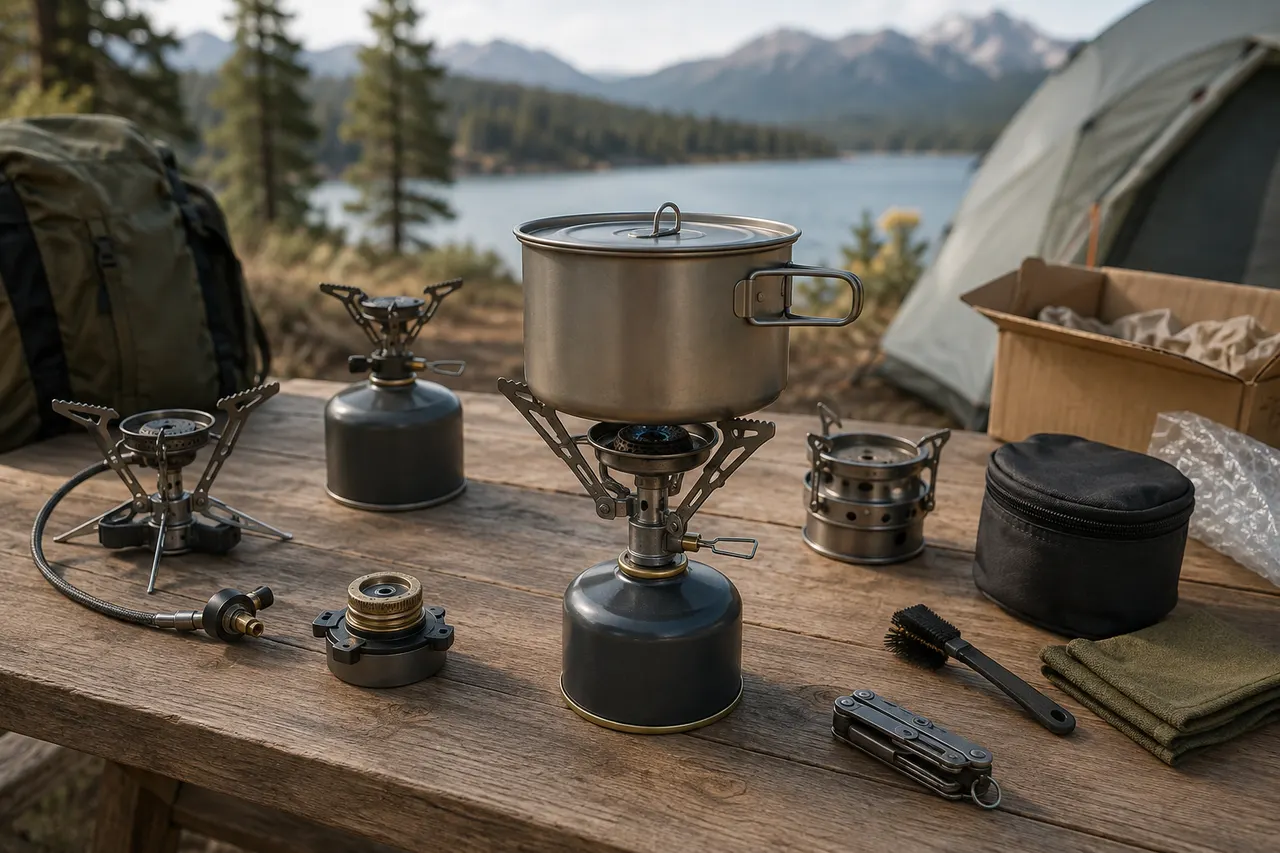
When choosing a camping stove, the brand name only helps narrow your search, but it cannot replace actual verification of fuel connection, pot support, valve condition, and parts availability. The goal of this guide is to help you organize candidate products on kako-sheets.org and create a verification record that can be used for pre-order confirmation, warehouse inspection, and subsequent maintenance.
This article is suitable for buyers who already know their general usage scenario but have not yet decided on a specific brand or series. If you need explanations of local gas regulations, air transport permits, extreme cold performance testing, or professional high-altitude equipment advice, you should instead consult destination authorities, carriers, and official brand materials. Stoves and fuel involve risks of fire, carbon monoxide, and pressurized containers; no stove should be used inside tents, vehicles, or other inadequately ventilated spaces. 🔥
Information verification baseline date: September 3, 2026. Prices, inventory, product links, available shipping routes, taxes, and return/exchange terms are highly volatile and should be reconfirmed on the day you place your order. This article did not obtain independently verifiable specific product samples, so it does not make current recommendations for any brand, model, price, or inventory.
First Determine Your Camping Style to Narrow Down Stove Brand Options
Describe your task first, then search for brands. At a minimum, note the number of users, common pot, expected environment, mobility, and maintenance conditions.
Ultralight hiking: Focus on stove body size, packed volume, pot support range, and wind protection, not just the weight labeled by the seller.
Car camping or fixed campsite: You can prioritize stability, adjustment range, and multi-pot compatibility, but still consider whether fuel is easily and legally available at your destination.
Group cooking: First check pot bottom diameter, total weight when filled with water, and support structure, then consider advertised heat output.
Cold or high-altitude environments: Do not infer performance from normal environment reviews; look for brand statements regarding specific temperatures, altitudes, and fuel types.
Occasional use: Prioritize options with clear connection information, easy-to-inspect structures, and readily available common parts.
After reading this section, you should be able to write a one-sentence filter goal, for example: "Looking for a stove suitable for two-person hiking, capable of stably supporting my existing pot, with complete connection information and easy maintenance at home." If you are unsure about fuel source or pot size, do not place an order yet.
Record Brand, Series, and Product Source in kako
When you find candidate products on kako-sheets.org, do not treat words in the title as confirmed brands. Record separately the brand, series, model, seller name, original product source, and page verification date; leave missing items as "to be confirmed." 🧭
It is recommended to save the following information for each candidate product:
Full product name as displayed on kako page
Original product page or seller source identifier
Visible evidence of brand and series
Model, version, and set composition
Whether specification images, packaging images, and close-ups of connections are available
Page access and price verification dates
Questions that still need to be confirmed with the seller
The same product card may contain brand words, series words, size words, and marketing words at the same time. Only when packaging, nameplate, manual, or product information from sources with clear origins are consistent can you mark the brand and model as "verified." If sources conflict, keep the conflicting content and do not merge it into a seemingly complete model yourself.
Check Fuel Type, Connection Specifications, and Usage Restrictions
Similar fuel names do not mean connections are compatible. Before ordering, obtain clear information on connection standards, connection methods, valve structure, and applicable fuels; compatibility cannot be determined based solely on canister color, stove appearance, or descriptions like "universal."
Verify in the following order:
Confirm the fuel category the stove is designed to use.
Find the connection name, specification drawings, and operating instructions provided by the brand or manufacturer.
Check the fuel containers available at your destination and their compliance requirements.
Confirm whether the product includes adapters, hoses, stabilizing stands, or other accessories.
Check whether adapters are explicitly allowed by the manufacturer; do not replace safety basis with "looks like it fits."
Confirm transport conditions for the stove body with the carrier; do not purchase or ship containers with fuel, residual fuel, or restricted pressurized containers across borders.
If any of the connection specifications, sealing methods, or fuel restrictions cannot be confirmed, change the candidate status to "stop order." Do not resolve incompatibility by forcing connections, grinding interfaces, stacking sealing materials, or using adapters of unknown origin.
Compare Burner Structure, Pot Support, and Storage Options
Pot stability cannot be judged solely by the number of support arms. Also consider the contact range when support arms are extended, hinge or locking method, stove center of gravity, fuel canister position, and total weight of a full pot. 🏕️
At home, first measure the bottom diameter of your common pots and record their approximate weight when full, then ask the seller for the stove's unfolded dimensions and recommended load range. If the page only shows staged photos of empty pots without unfolded dimensions, side structure, or load instructions, you can only confirm appearance, not stability.
Storage options also affect actual use:
Foldable pot supports: Check if there is a clear stop when unfolded and whether the joints are prone to collecting dirt or becoming loose.
Remote canister stoves: Check hose routing, connector protection, and space for the fuel canister.
Integrated canister stoves: Pay attention to pot center of gravity and bottom support conditions of the fuel canister.
Sets with storage cases: Confirm the case holds all accessories, not just the burner.
Without manufacturer load data, do not provide your own "maximum pot weight." Warehouse photos only help identify structural abnormalities and cannot replace ignition and load testing.
Check Igniter, Control Valve, and Replaceable Parts Information
The igniter is a convenience feature and should not be the only ignition method. Check igniter position, wire fixation, insulation condition, and backup ignition methods in brand instructions. Igniter reliability cannot be judged from static product images.
For the control valve, confirm the knob is intact, the valve stem is not visibly bent, and open/close directions are marked. Do not ask the warehouse to connect fuel for ignition or leak testing; such tests should be performed by qualified personnel with safe conditions and responsibility, following manufacturer instructions.
Maintenance information should include at least:
Whether seals, igniter, nozzle, or hose are listed as replaceable parts by the manufacturer
Corresponding part numbers and applicable models
Cleaning methods and prohibited tools
Warranty and return/exchange scope
Whether correct specification replacement parts can be obtained at your destination
If the seller only says "accessories are universal" but cannot provide dimensions, numbers, or compatible models, mark it as a seller statement, not a compatibility fact. 🔧
Use Product Images and QC Photos to Check for Deformation, Missing Parts, and Connection Abnormalities
Product images are used to confirm what the seller claims to sell; QC photos are used to check the appearance of items actually received by the warehouse. Their purposes are different and cannot replace each other.
When submitting inspection requirements, use observable and verifiable descriptions:
Take a group photo of the stove, storage case, and all accessories together
Take photos of product labels, model, warning labels, and packaging barcodes
Take close-ups of the fuel connection from front and side
Extend all pot supports and take top and side views
Take photos of the control knob, valve stem, igniter, and hose connectors
Check for visible bending, cracks, missing parts, severe rust, or transport compression
Use a ruler in the photo to record key dimensions, but do not estimate precision connection dimensions from photos with obvious perspective distortion
QC photos cannot prove airtightness, combustion stability, actual thermal output, or long-term durability. If connection damage, valve deformation, hose cracks, or model inconsistencies are found, pause shipment and handle within the return/exchange window, rather than shipping first and testing later.
Distinguish Visible Evidence, Seller Statements, and Information Still to Be Confirmed
Establishing evidence levels helps avoid mistaking marketing language for facts:
Information Status | What Can Be Recorded | Decision Method for Ordering |
|---|---|---|
Visible Evidence | Nameplate text, packaging list, connection close-up, unfolded structure, photos with measured dimensions | Save screenshots, source, and verification date |
Seller Statement | Material, power output, load capacity, applicable environment, accessory compatibility | Request specification documents or manufacturer information for cross-verification |
To Be Confirmed | Information not shown in images, conflicting descriptions, or lack of model correspondence | Leave blank and ask specific questions |
Unverifiable | Unsupported statements like "professional," "top-tier," "absolutely safe" | Do not include in comparison conclusions |
Material is particularly prone to over-inference. Color and surface texture cannot prove specific alloys or temperature ratings; must be based on traceable specifications. User reviews can suggest issues to check, but cannot replace model documentation, safety instructions, or on-site testing.
Build a Brand Candidate Table and Complete Pre-Order Verification
The final candidate table does not need many brands; usually two to four products with relatively complete evidence are easier to compare. Each candidate should include brand and model basis, fuel and connection, pot support range, set contents, maintenance parts, unresolved questions, current price, return/exchange terms, and verification date.
Complete a final round of checks before ordering:
Usage scenario, number of users, and pot size are written down
Fuel category and connection have traceable basis
Destination fuel supply and usage restrictions have been confirmed separately
Product version, set contents, and accessory quantities are not confused
QC photo requirements are specific and do not include dangerous ignition tests
Price, inventory, shipping cost, taxes, route, and return/exchange deadline have been rechecked on the same day
Safety-critical items that cannot be confirmed have caused a pause, not been filled in by guessing
This filtering method mainly saves costs from misbuying, returns/exchanges, and repeated purchase of accessories, but cannot promise a fixed amount in advance. It adds time for specification checking and waiting for seller responses, and cannot eliminate risks from shipping damage, manufacturing defects, or improper use.
This method is suitable for buyers willing to measure pots, keep evidence, and verify appearance at the warehouse stage; it is not suitable for those eager to ship, unable to confirm fuel connection, or planning to use stoves in unsafe environments like indoors or inside tents. As long as there are key doubts about connection, valve body, or maintenance conditions, the safest ordering decision is to postpone purchase. ✅
Agent Platform Shopping FAQ
1. What are QC photos on kako-sheets.org?
kako-sheets.org has a dedicated quality control team. When your item arrives at the platform warehouse, the platform will inspect the item and take QC photos. Usually three photos are taken, and they check whether the color, size, specifications, and quantity match the order, and also check for quality issues. However, for electronic products, only the appearance is checked. If there are quality issues or size/color errors, the team will immediately request a return from the seller to ensure you receive quality products.
2. How can I find products I want on kako-sheets.org?
You can search with a single keyword or go directly to category pages; products are also organized by brand. Longer search terms usually return fewer but more precise results than short terms. For example, you can search for "Air Force 1 White", "sneakers", or "Air Force 1".
3. Which platform's coupons are the most cost-effective on kako-sheets.org?
I recommend Kakobuy because it currently offers a coupon code with $15 off and no minimum purchase requirement, which is great for those ordering small packages. The coupon code is kakobuy888.
Browse our latest products and find your next favorite item.